Friday, February 4, 2011

FOR THE BIRDS

            In his poem “Alec,” John Ciardi remembers learning about birds from his Uncle Alec (né Alessio). “’God,’ he would say// ‘sends birds, not calendars.’”

            Anybody with a backyard birdfeeder knows Uncle Alec is right.

Kathy's workspace
            Because my actual desk is buried under piles of papers and the printer and partially completed projects and the books I need close at hand when I’m writing, the kitchen table is where I work. (Tim says I tend to take over every flat surface in the house, except his studio, where my stuff only consumes about 30% of the available space. Maybe 40%, if you count the closet. It’s why we moved my desk to the kitchen in the first place—painters need room.) Anyway, when not consumed by throes of creativity at the kitchen table, I look out the faux French doors across the screened porch to the back garden. The formal dwarf yaupon and the out-of-control eleagnus hedges, the Confederate-jasmine-covered arbor and parts of a Leyland cypress, a southern crabapple (Malus angustifolius, in case you were wondering) and the ‘Muskogee’ crape myrtle dominate the view. Those plants, and the birds.

The view from Kathy's workspace
            Families of northern cardinals, northern mockingbirds, Carolina chickadees, tufted titmice, brown thrashers, mourning doves and blue jays give our yard—and the blessedly undeveloped lots next door—as their permanent addresses. It’s not unusual to spot downy, hairy, red-bellied and red-headed woodpeckers. Sometimes a pileated drops in to sample the suet as well. In the winter, they are joined by transient dark-eyed juncos, red-breasted nuthatches, and the occasional flash of goldfinch and cedar waxwing. Our neighborhood is too built up for eastern bluebirds’ taste, but where the land is open, they’re there. On the beach, seagulls, sandpipers, willets, pelicans and cormorants take in stride the annual winter invasion of royal terns at Blue Water Point. In the salt marshes, several species of herons and egrets poke about for frogs, fish and fiddler crabs. Grackles hover in mobs in McDonald’s parking lot, begging for scraps, and killdeer cheat death by nesting in graveled driveways and roads.
           
Red-shouldered and red-tailed hawks, northern harriers and the occasional bald eagle and osprey survey the scene from atop utility poles or glide in lazy circles through Carolina blue skies. I know screech, great horned and barred owls live here too, although I’ve only seen barred ones. (Those sightings were traumatic for all concerned. In two separate mid-afternoon highway incidents during one horrible week in the fall of 2007, our truck was dive-bombed by barred owls: the truck emerged victorious both times.) Homely but useful turkey buzzards clean up carcasses left by cats and cars.

Tufted titmouse in the
'Muskogee' crape mrytle
Twice a day—once as we leave the island and again on our way back home—Tim and I look for “our” kingfisher on the electrical, phone and cable wires strung across the Intracoastal Waterway parallel to the Oak Island Bridge. He and the wife arrive when temperatures start to cool in the fall. We know it’s January when the white ibises show up to peck away on local golf courses, hard on the heels of visiting northward-bound robins. In early February, the red-wing blackbirds arrive in flocks of thousands, filling swampy places with chittering gossip about which backyards have the fullest feeders. In late February, the Carolina wrens and house finches come back from wherever they disappeared to in November. By mid-April, the kingfishers have flown north, leaving the summertime wires bereft.


Northern mockingbird
defending his berries
in the weeping yaupon holly

I catalogued all our local avian friends for you because North America’s Great Backyard Bird Count is being held this year from Friday, February 18 through Monday, February 21. The purpose is to provide a continent-wide snapshot of just which birds are where and in what numbers. Participation requirements are fluid: the minimum is a single 15-minute stint of feeder-watching over the four-day period. Conducted by the Cornell Lab of Ornithology and Bird Studies Canada, the family-friendly Count welcomes data from everyone—no birding chops necessary.

If you’ve got a birdfeeder in your yard, keep it filled that weekend and record who shows up to eat. I figure I might as well join in: I already spend a lot of time staring out at the backyard.

For more information about rules, data submission and bird-identification help, go to GBBC’s website at www.birdsource.org/gbbc. 
           
                                            * * *
            When I mentioned to Tim I planned to write about phenology projects, he looked puzzled. “Isn’t that the study of head bumps?” he asked.

            No, phenology is the study of plant and animal life-cycle events—first leaf, first flower, seed set, and so on. Scientists use phenologic observations to track global climate-change trends; to monitor drought and wildfire risks and the health of ecosystems; and to identify and keep tabs on invasive species, infectious diseases and pests. The task is enormous, and they need our help.

            In 2010, I signed up to participate in two citizen-scientist endeavors. One worked out, the other didn’t. Thumbnail sketches of these public-supported phenology projects reveal how you can add to databases vital to understanding climatological changes so that we may learn to adapt to them… before it’s too late.

National Phenology Network
Nature's Notebook
data collection sheet
      The USA National Phenology Network. A collaboration between federal agencies, environmental networks, universities and the public, NPN monitors the impact of climate change on plants and animals in the U.S. through compilation of widespread phenophase observations. Your mission, should you decide to accept it, is to choose one or more plants or animals for which you record and submit phenologic data. I chose the native maypop, Passiflora incarnata, because I had three large specimens close to hand (regular participation is enhanced if you make things convenient for yourself). The NPN’s Nature’s Notebook datasheet makes recording and submitting observations easy. The official website at www.usanpn.org tells you all you need to know to get started.

The Great Sunflower Project
data collection sheet
      The Great Sunflower Project. Here’s a chance to pay attention to the pollinators flitting around your yard. The mission of the Project is to create a map of which bees live where in rural, urban and suburban areas of the U.S. With the future of European honeybees in North America in some doubt, native pollinators like bumblebees and carpenter bees have suddenly come into the limelight. Participants grow bee-magnet ‘Lemon Queen’ sunflowers from seeds. Why only ‘Lemon Queen’? To ensure standardized results, of course. (“Bee” sure to order the annual species, please, not the perennial. Although marketed as easy to grow, mine never quite took off. I shall try again this year.) Take your morning coffee, datasheet, pencil and camera out to the sunflower patch, and settle in to observe any apians who visit your flowers during 15 consecutive minutes. Repeat two to four times a week. (Hint: plant the sunflowers where you’ll be reminded they’re there. Some of us aren’t at the top of our games at morning-coffee time.) The website helps you identify some of the more common native pollinators, and offers a great deal of information about phenology in general. Learn more at www.greatsunflower.org.


If these activities whet your appetite for involvement in backyard citizen-scientist projects, there are scads of others. Consider this partial list: eBird; Firefly Watch; Foliage Network; Frog Watch; Grunion Greeters; Hummingbird Monitoring Network; Jelly Watch (jellyfish, not jelly jars); Monarch Larva Monitoring Project; Project Budburst; Project Feeder Watch. It’s heart-warming and good for the old self-esteem to add to the sum of human knowledge about the natural world. And best of all, you needn’t even leave your property to take part.

Oh, yeah—the study of head bumps is phrenology. With an “r.”
Thanks for dropping by. See you next time.
                                                        
                                                                   Kathy

Monday, January 31, 2011

JANUARY WRAP-UP

            Writing this blog is good for me—makes me do things I’d put off indefinitely if I didn’t have to report on my progress. It’s like when Tim and I agreed to put our garden on the Oak Island tour back in 2003 and then had only six weeks to whip the place into show-shape. It was a hell of a lot of work, attending to all the small but important details we’d let slip. Also reminds me of my house in upstate New York, where the light “switch” at the base of the cellar stairs was a live wire you hooked onto another wire to complete the circuit. After eight years of this shocking make-shift arrangement, we decided to sell the house and had a proper switch installed.

            Funny what you’ll live with if there’s no threat of strangers poking around.

            Anyway, I’ve made some strides since December, and hope it doesn’t matter they all took place since last Thursday.

I ordered composter brackets for a second bin. They weren’t at Gardeners Supply, however, but at Lee Valley Tools’ catalog. The price rose 30% between 2009 and 2011—from $60 to $90—but I sort of promised I’d do something about rendering my lovely if unorthodox compost useable. I told Tim I’ll pay for them with the proceeds from my burgeoning writing career. He rolled his eyes and, resignation dripping from every syllable, said, “Like Min and her savings account?” (That’s a funny story, about our friend Min. By the time she married Jim in 1956, she’d salted away $8000. Whenever Jim balked at buying something or other she couldn’t live without, she’d snap, “I’ll take it out of my savings account, okay?” During their 53 years together, she spent that same $8000 about 30 times. By the time Tim and I got to know them, that account was both a legend and a family joke. Now it’s our family joke, too. Min died in July of 2009. I miss her every day.)

Got outside and started cleaning up. Sunday was a beautiful day, exactly what late January is supposed to feel like—temps in the upper 50s, mostly sunny, light breeze out of the west. I pulled the sere remains of the annual may-pop (Passiflora incarnata) off the outdoor shower wall, snipping carefully with my Joyce Chens, to protect the netting the tendrils latch onto and to make the debris small enough to compost readily. (To the compost Nazis: at last a respectable load of browns has entered the pile and was turned in. I hope you’re all very happy.)
 
Look, Ma!
No dead plants!

Once the shower wall and potting-table top were dead-plant-free, I moved on to the vegetable patch. The first picture in “Tis the Season for Excuses,” posted December 27, shows what I saw upon rounding the northwest corner of the dwarf yaupon hedge. Attacked the tattered evidence of last season’s hopes, not bothering to be careful: the 25-gallon-potful of these leavings ended up on the curb, hopefully forestalling any resurgence of lurking latent pathogens or, PDIC help us, pickleworm larvae. Then I disassembled the deeply ugly trellises I’d cobbled together from yards of pink surveyors tape and pieces of the PVC seed-starting table Tim built me some years back. (Why the shelves were available for conversion is a story for another February or March day.) Finished up by dumping the soil from the melon and potato pots onto the vacant lot next door—it’s biodegradable, y’all—and trimming up the 38 cold-hurt Lamium maculatum ‘White Nancy’ my grower-friend Christine gave me.

            Doesn’t sound like much, but those chores plus the regular Sunday bird-feeding, compost-turning and walkabout took three hours. By 4:30, my butt frozen from sitting on the concrete driveway while spiffing up the lamiums, I was ready to come in for some cocoa, a shower, dinner, face-time with the computer, and the third installment of PBS’ “Masterpiece: Downton Abbey.” Anyway, it’s a start. Kathy-the-ant shifted some grains. (Kathy-the-ant? See the post cited above.)

The garden as blank canvas
            Moving right along, starting plants from seeds requires a tremendous leap of faith for me. If the poor things have to stay indoors too long past germination, they’re almost certain to fall victim to damping off, drowning (mostly the same thing), insufficient quantity and quality of light, failure to get pricked out and/or moved to larger pots in a timely fashion, or active neglect bred of frustration with the lank, moldy things. My luck (and the plants’) improves with direct sowing, but that often makes for vegetables that don't mature to fruit-set, and flowers that never reach bloom-stage. Nonetheless, last Thursday I ordered 17 packets of seeds from Renee’s Garden—five vegetables, 11 flowers, and a grass mix for the cats, in fond hopes they’ll stop tearing at the Cordyline and the clumping bamboo on the back porch. These will swell the ranks of the two dozen envelopes of embryonic veg left over from last year. 

A cyclamen bouquet
             A quick aside: One of the beauties of Mel Bartholomew’s square-foot gardening technique is that you sow only the number of seeds as the number of plants wanted, instead of scattering a whole packet and subsequently thinning the sprouts. This feature, along with failures distributed into several small pockets rather than a single generalized one, sold me on Mel’s method. I don’t like destroying possibly viable seedlings. It’s funny, really, that I should feel this way. I can yank out a shrub that’s underperforming and fling it to the curb without a second thought. In fact, my favorite gardening quote of all time is English gardening eminence Christopher Lloyd’s bon mot, “Deaths can be imposed as well as waited for.” But I balk at arbitrarily giving some sprouts the thumbs-up and others the thumbs-down, like some ancient caesar.


Solanum pseudocapsicum
releafs and blooms

           Since I qualify as a staunchly average gardener in terms of the amount of time and effort I’m willing to expend on any given endeavor, I figure you might benefit from the occasional eureka moments I experience, and from the guaranteed disasters my adventures in growing from seeds will engender. Oh, come on, you love it when a self-styled “expert” falls on her face. I know I do.

            In mid-January, on our most recent visit to her greenhouses, my aforementioned friend Christine gave Tim and me four beautifully blooming Cyclamen coum, florists’ cyclamen. They make a gladsome sight on the piano, along with the miracle poinsettia and the tapeworm fern. I’m following C’s watering instructions to the letter, hoping for a second batch of odds-beaters.

The Christmas Miracle
poinsettia boldly goes
into February


In other houseplant news, the papayas continue to hum along. They recently got doused with very dilute coffee, alleged to proffer some benefit. I’ve also taken to dumping the leaves from my nightly cup of green tea onto the pots’ dirt. I read somewhere (but where?) something positive comes of this practice, but damned if I can remember what. (If I ever unearth the clipping, I’ll fill you in.) The Solanum pseudocapsicum is releafing, if spottily. It even sports a few blossoms, an overwintering first. The Cordyline terminalis, Pentas ‘Stars and Stripes’ and the verbena continue to hold their own. All good wishes fervently appreciated by all of us.

Soon after the “Making Connections” post of January 19, the clip at left appeared in the Wilmington paper about the better-late-than-never comeuppance of the man who introduced hog CAFOs to North Carolina. And Tim sent me a link to the jaunty jingle, “Monsanto Rag,” which I share with you here. Two little day-brighteners to waft you into February.


Thanks for dropping by, and especially for giving me added impetus to do the things I ought to be doing anyway. See you next time.

                        Kathy

Thursday, January 27, 2011

BUGGED

            So I jumped the gun by a day and posted on the 23rd instead of the 24th. That just means we shoehorn in another rumination for January.


Welcome to Gardner Hall'
home of the PDIC

            Had a marvelous time at North Carolina State University in Raleigh last Tuesday. Everyone Tim and I met in the plant pathology department was lovely, if a little twitchy at being interviewed. Tighter funding for institutions of higher learning translates to smaller pies to be divided between competing academic interests: the threat of downsizing may have contributed to the hint of reticence we felt. One poor fellow we snuck up on in the lab looked absolutely terrified when we asked him to tell us which plant disease gets reported to him most often.

As noted elsewhere, I’ve been out of the academy for some time, and am less sensitive to the nuances of life in cubicles and labs than I might have been years ago. I would like to take this opportunity to apologise for upsetting the gentleman who only wanted to be left alone to get on with his work. 


Samples inundate the PDIC lab
 And fascinating detective work it is, too. Nancy Drew and her gang could learn a thing or two from the men and women poring over the samples of sick plants and  healthy bugs pouring into NCSU’s Plant Disease and Insect Clinic (PDIC). They come from all over the state (and occasionally beyond), farmers and commercial growers and Extension agents and Master Gardeners and homeowners all needing positive identifications and suggestions for control. Clinic director Dr. Barbara Shew and Mark Abney, assistant professor of entomology and Extension Specialist, gave generously of their time to answer all our questions about the mechanics of diagnosis and prescription. The bulk of their labor is directed toward agricultural and commercial interests, but do check out my up-coming article in the June issue of Carolina Gardener to learn how they can help Joe Homeowner figure out what’s eating his collards or marring his ligustrum foliage. (Hint: it’s not ground pearl.)

Two other elegant factoids about NCSU and plant pathology before we move on:
1.      NCSU is rated one of the top five university entomology research departments in the whole country. Go, Wolfpack!
2.      Because agriculture in North Carolina is so diversified—top cash crops include tobacco, cotton, soybeans, corn, peanuts, sweet potatoes, apples and, hey, dude, marijuana—our guys have a broader base of knowledge than their counterparts at, say, Iowa’s land-grant universities, who deal primarily with corn and soybean problems.

Tim and I spent the rest of our day in Raleigh at the NC Museum of Art, taking in the excellent Norman Rockwell exhibit. We were among the youngest of attendees not dragged there by parents or grandparents, which was gratifying. (As one’s birthday-tally mounts, one finds oneself counted as youngest anything an increasing rarity.) Tim paints, so he wandered off to scrutinize brushwork and composition and such-like. I gravitated to the collection of all 339 Saturday Evening Post covers Rockwell contributed between 1916 and 1963, some of which I vaguely remember arriving through our front-door mail slot in 1960s suburbia. Crowds collected in clumps in front of the covers display.  Fortunately, the advanced average age of the gathering meant most had some notion of museum etiquette. (I’ll never forget the lady at a Met exhibit of 19th-century European works on paper who stuck her toddler’s head between me and a lovely Daumier image, saying, “Look at the horsie, honey! See the horsie?” Like an 18-month-old gives a rat’s ass about Daumier’s horsie. But I digress. Again.)

Garet Garrett:
read all about him at Wikipedia
 
Back at the Post covers, I started reading the names of the featured authors. Even though several wrote many pieces for the magazine over the years, none rang a bell in my mind until I reached 1924, when F. Scott Fitzgerald (Cousin F, we call him) showed up for the first time. In 1925, he was joined by Mary Roberts Rinehart.  A. Conan Doyle (billed as Sir Arthur Conan Doyle a year or so later) got a byline in 1929. By the ’30s, Booth Tarkington and Will Rogers were on the payroll, and Edith Wharton made a contribution too.

Well, this is all mesmerizing, you say. Is there a point to it?

Yes. What really struck me is that most of the other writers, although popular in their day, are no longer household names. Most were male, most had three names that sounded like three last names (Codington Breveton Vancour, like that), most are utterly forgotten. Have you ever read anything by Garet Garrett?

And the point is… ?
Princess # 1

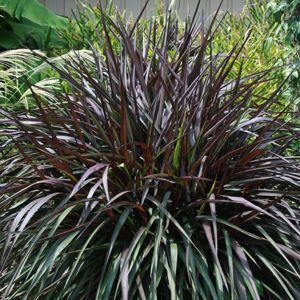
The point is on its way. Don’t go buggy. Last spring, Athens Select Plants, the University of Georgia-Athens’s ornamental plant breeding program, sent me two “new” hybrid purple fountain grasses (Pennisetum purpureum) to try out in my garden. (It’s my favorite garden-writer perq, free plants and seeds to trial. I filled out a 17-packet seed request to Renee’s Garden earlier this afternoon.) Turns out 2010's ‘Princess Caroline’ is essentially identical to 2008’s ‘Princess,’ only more disease-resistant (an ornamental grass susceptible to disease? What moron would buy it if they knew?) and heat-tolerant (a plant only perennial in Zones 8 and up has problems with hot weather?). And ‘Princess Molly’ is yet another virtual (in the literal sense) ‘Princess’ clone, just allegedly four inches shorter. See if you can spot any difference: take our little ID test at right. Correct answers provided below. 


Princess # 2

All of these disease-prone, heat-hating purple Princess pennisetums (hort-darling Dr. Allan Armitage calls them “Napier grasses”—those of us in the cheap seats say “fountain grass”) are essentially the same plant. They are the Garet Garretts of the plant-breeding world. They cause a minor splash today, three years pass and, Bob’s your uncle, no one hears of them ever again.

This practice of rushing untested introductions to market really bugs me.
 
Now, I’ve zigged and zagged from NCSU’s PDIC (aren't acronyms great? So easy to type!) to Norman Rockwell to Cousin F and Garet Garrett to superfluous ornamental grasses. Why? Because as spring approaches, the catalogs and promotional materials from plant breeders are coming thick and fast, and they all tout their newest “discoveries” in the purplest prose. In case you didn’t know, plant patenting has become a big and competitive business. Ask your nearest Monsanto representative. He's lurking somewhere nearby. 


Princess # 3 

In my neck of the woods, summer bedding-plants start arriving at big-box stores around the end of February. This is a month early, even for our mild climate, but retailers know their winter-weary customers well: if it’s blooming, it sells. Whether it ought to or not.

So the point is (at long last), don’t break the bank for every herbaceous Garet Garrett that grabs your eye with its oversized four-color tag and forced flowers. The percentage of Fitzs' disposable income earmarked for the garden has decreased dramatically over the past several years (thank goodness for those freebies!). If your mad-money pile has shrunk too, the better part of financial valor is to wait a few seasons to see if this year’s trumpeted “next best ornamental since Wave petunias” really is the horticultural equivalent of F. Scott Fitzgerald.

On the other hand, if the recession treated you gently, try them all. (Except those Princess pennisetums. Personally, I’m sticking with good ol’ reliable red fountain grass—P. setaceum var. rubrum—even if we do have to treat it as an annual here.) Hey, one of this year's introductions might be the next Knock Out rose, and then you’ll be ahead of the curve.


Good ol' red fountain grass,
with infloresences.
That the Princesses
don't get any of.

 In his ever-creative bid to make his wife appear somewhat computer savvy, Tim has taught me how to insert hyper-text links (they're the blue or perhaps green phrases in the text: if you click on them you're transported straight to the appropriate website. That's the theory, anyway). He coached me through putting four of them in this post. In your comments (and I say this with very little hope in my heart), let me know if they actually work. I’ll keep at it until you tell me they’re useless and to please stop.

Thanks for dropping by. I really appreciate it, even if you insist on staying mum about it.

                                           Kathy
Answers to the Princess quiz:
 # 1 is Pennisetum 'Princess Caroline' (introduced 2010)
 # 2 is Pennisetum 'Princess Molly' (introduced 2010)
 # 3 is Pennisetum 'Princess' (introduced 2008)


Sunday, January 23, 2011

SIGNS OF CHANGE

            The temperature this morning dipped below 20°F for the first time, blowing a hole right through our heretofore Zone 9 winter and sinking us to Zone 8b. I do have to say, we haven’t felt much like Zone 9 since December anyway.

 
Tim and I actually got outside for a few billable hours at the end of last week. After eleven consecutive days of weather-enforced sitting around the kitchen/office—staring at the computer screen, completing too many Sudokus, crawling into bed late, dragging ourselves out of bed late, watching too many BBC cosy DVDs—an afternoon spent pruning and weeding felt like a commuted sentence (as opposed to a convoluted sentence, of which the foregoing is a prime example).


Oak Island's lowest
temp of the winter
of 2010-2011
             Although no one is trumpeting the arrival of spring in these parts—get real, it’s still January—subtle signs of seasonal change are out there if you pay attention.

            Days are getting longer. As of this posting, we have 19 minutes more daylight than in late December. More importantly, the sun comes up two minutes earlier than it did a week ago, and the pace accelerates from now on. It’s a miniscule change, but fraught with significance. Plants feel it, too.

            The constellation Orion has transited from the east (rising) to directly overhead (apogee) to the west (setting) when I go out for bedtime weather observations. (An astronomical aside: Along with Cassiopeia, the Pleiades and the Dippers, Orion is the only constellation I can reliably identify with any degree of certitude. Sometimes I think I know Leo—the bright red star Regulus marks his heart—and the teapot shape of Sagittarius. Sometimes I don’t. And, whenever I’m in the Southern Hemisphere, the Southern Cross is a no-brainer. I’ve always meant to devote more time to studying the visible stars: the problem is, you have to go out at night to do it. And then, there’s all that neck-craning. Wouldn’t it be useful if someone would just draw the lines and limn the faces?)


‘Tête-à-Tête’ daffs
are coming
             Tips of the ‘Tête-à-Tête’ daffodils that live near our front door have poked their hard green noses out of the mulch. In other yards, other daffs are stirring. Fine-bladed foliage of starflower (Ipheion uniflorum) and Crocus tommasinianus makes the front bed along the sidewalk look like it needs weeding. Tim spotted what we think might be a redbud (Cercis canadensis) flaunting a set of red buds (duh) at the tip of a branch. Bradford pear buds are swelling. We have buds, or maybe they’re flowers, on our Edgeworthia chysantha (paperbush), but I can never tell what’s up with them. They always look slightly embarrassed and mildewy to me.

            The very earth, when you get your nose near it, smells expectant. The angle of the sun is higher. Everything outside feels itself on the verge of something wonderful.

            Yesterday morning, my eponymous follower, Cathy Fitzgerald, sent me the new post from her site, EcoArtNews. I scrolled back through some of her earlier pages and stumbled on a charming video snippet of Wangari Maathai telling her hummingbird story. For those of you who have never heard of her, Ms. Maathai is the founder of the Green Belt Movement, a program aimed at combating deforestation, desertification, rural hunger and water crises in Africa through the empowerment of women. She persevered despite political persecution and personal setbacks to win the Nobel Peace Prize in 2004. It’s nice to know that occasionally the recipient has actually done something to deserve it.

            I’ve included a link to the hummingbird story. In keeping with my theme of little changes, we can all choose to be hummingbirds.

          
               Today’s is a short post. On Tuesday, Tim and I are off to the Really Big City—Raleigh—where I have arranged an interview with the director of the Plant Disease and Insect Clinic (PDIC) at North Carolina State University and a tour of the lab for an article about the PDIC’s services (that will appear in the June issue of Carolina Gardener magazine). As part of their land-grant-college mandate, the Clinic will identify your bug or disease—free for pictures, but they have to charge for mailed-in samples—and suggest environmentally responsible control measures. I used the service for the first time last summer for an invasion of baby army worms on my wax beans… except I didn’t know they were army worms until the entomologist-on-call got back to me via email with 24 hours. 


Norman Rockwell's
"Triple Self-Portarait"

This is our first road trip in a while. We plan to take in the Norman Rockwell exhibit at the NC Museum of Art, and expect to come home feeling all gooey about our 1950s childhoods. But I need the rest of today and tomorrow to prepare (for the interview, not Norman), so I won’t come off as a total blithering idiot. I’ve been out of Academe so long, I sometimes forget to not be intimidated by it.

Can’t believe it’s almost time for the January Wrap-up. Where does the time go?

By the way, Tim added two easy ways to subscribe to this blog, by a search-engine reader and by email. The simple-to-click options are on the sidebar at the top of the post, above the profile.

Thanks for dropping by. Y’all stay warm.

                                                                                Kathy


Thursday, January 20, 2011

COMPOST HAPPENS II

           Old stone to new building, old timber to new fires,
           Old fires to ashes, and ashes to the earth
           Which is already flesh, fur and faeces,
           Bone of man and beast, cornstalk and leaf.
                     T.S. Eliot, from “Burnt Coker I,” Four Quartets

So what do I have to do to get you into composting today? 

Gardeners Supply's
compost bins Models 1 & 2...

There’s a lot of composting info-opportunities accessible to the curious. I conducted a casual cyber-survey by typing “composting” into the Google search box. In seconds, I had 12,500,000 results. That’s twelve-and-a-half million listings.

Narrowing the field a bit, I typed “composting” into Amazon’s books search bar. Five hundred ninety-six titles are available. I’ve already read two of them—only 594 to go.

Feeling myself on a roll, I upped the ante and typed in “composting supplies” while still at Amazon. Almost 200 sites vie to sell you something to turn your garbage into soil food. (And skillions more want to suck you into a black hole of disengagement from real life.)

A sad fact of modern life, too damn many pseudo-choices effectively paralyze those who get sucked into the maelstrom. My life-long quest for simplicity has yielded a few pertinent insights on the subject: 

1)      If an activity seems complicated, riddled with rules, and/or oozing with experts’ advice, most of us won’t advance past the cursory investigation stage. I mean, how many of those 12,500,000 sites would you click on before your brain reverted to dial-tone? (I only got to three.)

2)      If an activity, once started, appears to cost too much—either in money, time, or psychic resources—most of us will find a way to weasel out of it… regardless of how much money, time or psychic energy the extraction requires. For example, think of all those exercise bikes, treadmills and bow-flex systems languishing at garage sales everywhere.

...and bins 3 through 7,
a worm composter
(not for composting worms)
and accessories
3)      If, however, an activity becomes enjoyable for its own sake, the putative rewards dangled to hook us in the first place begin not to matter. That’s when an activity becomes a part of who you are.

A depressing corollary to the above list is that most of us expend far more energy on 1) and 2) than on 3).

Should you decide to take a figurative plunge into compost, I can testify the literature is full of rules. First and foremost, compostable candidates must fall into one of two color-coded categories. Kitchen scraps, grass clippings and non-woody garden debris—you know, the moist, green stuff—are called greens. Material with higher carbon content, like dead leaves, twigs, shredded newspaper and used paper towels, are browns. Mavens expound upon involved formulae for proper layering techniques to maximize a pile’s performance. There are also very specific heat, air and moisture requirements to be maintained. In fact, the many rules and criteria for constructing an ideal composting environment almost convinced me to forget the whole thing. (I do not play well with authority.)

Oh, yeah? I bristled to myself. We’ll just see about that.

Through trial and error, I proved the rules are all pretty much unnecessary. Nature never takes the advice of experts. Nor do experts read Eliot, apparently.

Gardens Alive!
compost tumbler system
and thermometer
In my own practice, I do everything “wrong.” My greens and browns go on the heap in the same order they come out of the kitchen and yard without regard for proportions or layering. I cavalierly toss in bits of cheese, cat-brush leavings, ashes from barbecued income-tax records, baked goods, threads and scraps of material (yes, I mend clothes!), the contents of our paper-shredder bin, past-its-prime yogurt, used-but-un-disease-ridden potting soil, and, on rare occasions, unfit-for-human-consumption cold cuts: this despite dire warnings, threatening vermin and stink, against dairy, sugar, meat and non-soy inks and dyes. My bin is not optimally located either for sun exposure (it’s shaded most of the day) or protection from overhead watering (the south-side spray-heads douse it twice a day in summer), so prescribed levels of oxygen are, pardon the pun, dampened. I’m lacksidaisical about ensuring the cooler edges of the pile get folded into the hotter middle to equalize the “cooking” process: all I do is stand at one end of the bin, stab and flip four or five pitchfork-fuls, move to the other end and repeat.

My stuff—all of it—still composts. It resembles dirt. I have earthworms. There’s no noticeable unpleasant odor (believe me, Tim the Nose would notice and remark).

Kitchen scrap buckets galore
from Gardeners Supply...
For the sake of argument, let’s say you’re not as, er, flexible about rule-following as I am. You can participate in the composting process as much or as little as you like, depending on how compulsive, impatient and/or controlling you are. Type A personalities with money and time to burn might purchase a pair of those big, multi-chambered tumbling barrels for the quickest alleged turnaround time between garbage and good stuff. A moderately obsessive approach consists of some arrangement of multiple bins for shifting piles back and forth, ostensibly to maximize aeration and temperature, allowing you to think you’re speeding up the process. (I’ve provided pictures of available ready-mades from Gardens Alive! and Gardeners Supply catalogs.) The laissez-faire-minded—such as myself—can just dump their biodegradable detritus somewhere inconspicuous and let it decompose. Left to their own devices, microbes and earthworms magically appear and set to work breaking down garbage into crumbly, rich, non-stinky soil.

Truly, the smell is not bad; exceptions can be dealt with quickly by turning them under. (The most malodorous product I know of is Milorganite, which is not composted anything, but treated industrial sludge. Beware those heavy metals!) Once composted, even manures don’t reek.


...and still more
scrap buckets and accessories

Speaking of which, herbivore manure is always a welcome addition to the heap. (Of course, not everyone agrees. Soil gurus Lowenfels and Lewis caution against it in compost destined for edible crops. That’s just a tad too “perfectly safe” for me. But they live in Alaska, which probably explains something.)  My friend Christine has access to unlimited quantities of llama dung, of which I am darkly envious. Short of keeping small herds of bovines, ovines or equines and/or flocks of chickens, turkeys or bats—or having friends who do—most of us totter on without. It’s why the gods invented Black Kow and Daddy Pete’s.

An environmentally responsible and productive activity, composting reduces burdens on overflowing landfills while allowing us to benefit from direct recycling of some of the immense quantities of waste we generate. Despite all the print and cyber hype, composting doesn’t have to end up on the dust-heap of abandoned ambitions along with bread machines, cross-country skis and all those bizarre paper-punches scrapbookers covet. Why not? Because, if you let it, compost just happens.

Did you notice Tim updated the site’s template? And I posted a new profile picture, of me and Tim at four, 1958 and 1954, respectively. We were awfully cute in those days. Please leave a comment if the spirit moves you. Or perhaps the comment-shy (and so far, that’s damn near all of you) can visit “Gardening Gone Wild” (www.gardeninggonewild.com) for inspiration. It’s a WordPress blog I stumbled upon where garden writers write for other garden writers and we all tell each other how wonderful we are. I’d sign up to follow it, but I don’t understand RSS.

I shall move on to other pastures next time. Thanks for dropping by.

                                                                            Kathy