Showing posts with label Kudzu. Show all posts

Saturday, September 3, 2011

INVADED, BY NATIVES


Sweetgum (Liquidambar styraciflua)
is native to my neighborhood...
            In recent years, gardening with native plants has come into fashion. Again. When Tim and I get asked to design one, we give each other secret little smiles and ask the potential client, “Native to where?”

You may recall that, a few posts ago (“Wind and Weather,” August 17th), I vented my annoyance with the NWS and NOAA for using the word “normal” for their computed 30-year averages. (Check out my new gadget at right, Acronyms Explained.) When I read an exchange in American Nurseryman about regulating “invasive” species—those quotation marks again!—I had a similar reaction. “Native” is as nebulous a concept as “normal.”  


...while Rhododendron catawbiense,
native to western North Carolina,
does poorly on the coast; and...
            I’m not just being supercilious and snotty here. Most people, even when impelled by environmental earnestness, don’t have any concrete idea what “native” means. Newcomers here often consider hybrid azaleas, crape myrtles and gardenias Southern natives. Nope, they all originated in China and/or Japan. Tomatoes, some rhododendrons and hemlocks do come from North America—just not this part of it. In the 500 or so years since first darkening the doors of this continent, Europeans have introduced about 50,000 plant species. These introductions include about 90 percent of our present food crops as well as a hefty slice of the ornamentals pie. And that doesn’t include “exotic” animal species like horses and nutrias; insects like European honeybees, some earthworms, fire ants, and the emerald ash-borer; plant pathogens like Dutch elm disease, chestnut blight, and the fungus responsible for sudden oak death; or human diseases like West Nile virus and avian flu. Makes you think, doesn’t it?  


...and crape myrtles
(Lagerstroemia indica x fauriei)
came from the Orient.
            Over time, many introduced species have interbred with their indigenous counterparts, producing natural hybrids that muddy genetic-origin waters more than a whole university-full of hyper taxonomists. 
           
            People who really, really want a native garden should buy a large parcel of land and just encourage (and perhaps impose a little structure on) what’s already there. Indeed, I would argue that all “gardens” are by definition artificial, the result of human will worked on the land. 

            Philosophy aside, the flip-side of what makes a species native is what makes one non-native. Except for recent introductions whose provenance is (somewhat) known, it can be really hard to tell who’s whose horticultural daddy. Sylvan and Wallace Kaufman point out in the first three chapters of their excellent book, Invasive Plants (see Good Reads at right), that all “natives” were once successful invaders. 


Trans-Atlantic transport
circa 1670
To illustrate the difficulty inherent in defining “native,” I present a Homo sapiens example. Both Tim and I were born in United States to parents who were also born in the United States. No one from either family (the documented ones, anyway) is indigenous to the eastern U.S. My ancestors hailed from all over Western Europe, and it’s anybody’s guess how they ended up there. Two or three lines of my family had established themselves in North America by the latter half of the 17th century. Yep, I’m certified DAR and UDC (check out that acronym gadget mentioned above). But am I more native than Tim? Both sets of his grandparents sailed from Ireland in the 1890s, some 220 years after my folks got here. Besides, with all due respect, even the “Native Americans” came from somewhere else—can you spell “land bridge”?


Welcome to the New World,
circa 1900
            The Kaufmans assert that “native” does not always mean “better,” nor can we assume that exotics always cause “harm” in “native” environments. This issue is about as far from cut-and-dried as you can get. Nonetheless, in our crisis-of-the-day national mentality, it’s just a hop, skip and a jump for some people to move from neutral non-native to frightening invasive.


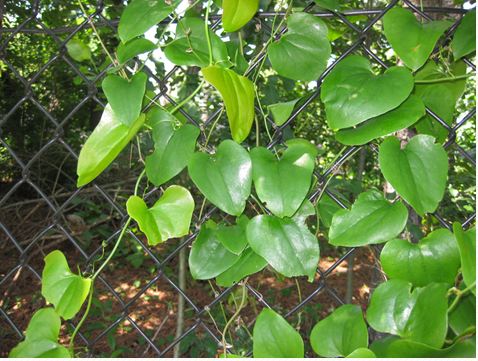
Invasives poster child,  kudzu
(Pueraria lobata)
            Remember those 50,000 plant species introduced to North America since the 1500s I mentioned a while back? Well, about 5000 of those have escaped cultivation and moved in with the 17,000 “native” species. How did these foreigners get into the wild? Birds and rodents relocate lots of pre-fertilized seeds. Water and wind do their bits, carrying seeds and even entire plants over long distances. Large mammals join the party by transporting seeds and bits of roots on their fur or pants or shoes. Most new arrivals have proven to be good neighbors, behaving well and blending in nicely. On occasion, however, some thug will throw its weight around. The buzzword “invasive” applies to these rogues, the cause of all sorts wailing and gnashing of teeth among environmental purists and legislators.

The best definition of an invasive is “a plant that is too successful.” Its trademark trait is the speed with which it takes over an area. Examples of When Plants Go Bad in the South include kudzu, Asian wisterias, Japanese honeysuckle and Chinese ligustrum (a.k.a. privet). New York battles purple loosestrife and milfoil. In the Middle Atlantic states and the Northeast, burning bush, barberries, and Miscanthus cause problems. South Florida fears nandina, melaleuca, and many, many others. The Irish suffer from troublesome volunteer butterfly bushes growing in their gutters and chimney pots. And so on.

The Invasives Alert page from
June 2011's Fine Gardening
            “Invasives” appear globally, but are they necessarily a problem? Some scientists theorize that more than 90 percent of all species that ever lived on earth have gone extinct. (How did they determine that? I don’t know.) Must we assume that “change” equals “harm”? We cannot turn back the clock to the time of North America’s virginity. Isn’t it possible that what we perceive as “invasiveness”—or “man-made global warming”—is really part of an on-going process, and that maybe everything, even Homo sapiens, only gets to stay on the stage temporarily?

             There’s also the local character of invasiveness to factor in: for example, kudzu’s not a problem in Minnesota.
           
Anyway, the challenge facing both the horticulture industry and gardeners boils down to avoiding being part of the problem. Most states’ Cooperative Extensions post lists of local potential invasives on the internet, as do watchdogs like the Nature Conservancy, the Invasive Plant Atlas, the USDA Plants Database, the National Invasive Species Information Center, and Invasive Alert. Connecticut leads the way in outlawing flora non grata, legislating against anything that’s invasive anywhere. (In fact, I’m considering relocating there, as they must have already handled the important stuff like universal health care, unemployment, education, immigration problems, and the shrinking of the middle class. You think?) If you suffer from technophobia, as I do, call your Extension or State Department of Agriculture: they will sigh heavily and eventually mail you something. The Kaufmans’ book has a long list of sources of information as well.


Looking for alter-"natives"?
            Some people think the only way to combat invasiveness is to use only natives, and write hefty tomes on the subject (like Armitage’s Native Plants for North American Gardens and Native Alternatives to Invasive Plants—see Good Reads at right). Seems to me a lot like throwing out the baby with the bath-water, however. Your real-life options? Refuse to use plants like Japanese honeysuckle and barberries, boycotting the nurseries and garden centers that grow and sell them; or keep a tight rein on your beloved specimens, including provisions in your will that potential invaders be immolated with you on your pyre.


Check out these books by 
Allan Armitage
or C. Colston Burrell
             A parting thought: in the August-September 2007 issue of Horticulture, Carol Reese responds to a reader letter about her recommendation of a plant considered to be an invasive in some places by saying, “My main concern is loss of habitat, and humans are the worst of the invaders… [E]cologically sensitive landscapes… need not be all native, especially if the plants are those that can be grown without chemicals… The Earth is in a constant state of flux, which does not relieve us of responsibility, but requires us to make the best choices we can with what information we can gather.”
 
            So get informed before you plant. And whatever else happens, don’t you be slipping in a cutting of kudzu to cover your new pergola. Unless you live in North Dakota.

                                                                                    Kathy

P.S.—You may want to invade Plant Delights Nursery’s Fall Open House. It's being held the weekends of September 9-11 and 16-18. Weather’s nicer now, if you weren’t up to facing the summer do.

Monday, August 1, 2011

VINES WE LOVE TO HATE... OR NOT

The amorphous malaise continues. Maybe I’ve developed a sensitivity to increased atmospheric carbon dioxide. Regardless of what my problem is, burgeoning CO2 levels makes vining plants very happy indeed. In 2007, USDA scientist Lewis Ziska published a study in Weed Science saying that, since the 1950s, vines grow more vigorously and spread with devil-may-care aplomb; they’re harder to kill; and, most ominous of all, the effects of the itchy-rashy substances in the skin-irritating ones are magnified.  If you’ve battled any of the following in your yard, you know he's right.

Poison ivy counts as the worst offender by my reckoning. Urushiol, the chemical that causes the irritation, rash, blistering, oozing and itch, is present in the leaves, stems, woody parts and roots. It remains active even after the plant dies. Some hyper-sensitive unfortunates even react if exposed to the smoke of burning poison ivy, developing lesions in their mouths, noses, throats and lungs. Can you imagine?

Poison ivy, with leaves of three
Toxicodendron radicans
            Growing up in the swamps of southeastern Virginia provided opportunities aplenty for close encounters: Girl Scout Camp Skimino was redolent with the appropriately named Toxicodendron radicans (the genus translates to “poisonous wood”). My dearest childhood friend, Ginny Black, had only to pass within 30 feet of a strand to start scratching. Because children are cruel, all of the urushiol-invulnerable Scouts giggled at her misery. In those days, I could roll in the stuff and suffer no ill effect.  The day I turned 50, however, my immunity switched off. If balance exists in the universe, as I believe it does, Ginny’s curse disappeared around the same time, and she gets the last laugh. Fifteen to 30% of people are completely immune: the rest suffer at differing times in their lives (like Ginny and me) and with differing intensities.

More deeply lobed poison oak leaflets
Toxicodendron pubescens
Regarding poison ivy, our Scout handbook taught us the ditty, “Leaves of three, let it be.” This is sound advice for the fearful, akin to “Better safe than sorry.” One of life’s little ironies, it’s easier said than done for those gathering wood for the campfire, and for those laboring in gardens of their own or others. Learning to recognize plants that contain urushiol is the best defense. The three commonest offenders are poison ivy, Atlantic poison oak (Toxicodendron pubescens), and poison sumac (T. vernix). I include pictures of all of them here, and links to websites with more information.

Poison sumac doesn't follow
the "leaves of three" dictum
Toxicodendron vernix
Southeastern North Carolinians only need worry about the first two: mercifully, poison sumac doesn’t grow here. I say “mercifully” because the “leaves of three” dictum doesn’t apply. Poison sumac looks like, well, non-poison sumac. Poison oak is indigenous to the south, ranging from New Jersey to Kansas, and south to Florida and Texas, except for Pennsylvania, Ohio, Indiana and Kentucky. Go figure. Poison ivy is native to all of North America east of the Rockies plus Arizona, but not in New Mexico, North Dakota, Newfoundland and Labrador.

Why is there poison ivy? Non-human animals seem urushiol-proof: many eat it with gusto, and the berries are a great favorite of many birds. Another sorrowful mystery for the books. For rash palliatives, go to December 10, 2010's post, "Stuffing Stockings." 

I’m starting to itch, so it’s time to move on to less painful but just-as-vigorous vining plants liable to turn up in your yard.

Virginia creeper creeps
up a tree in a vacant lot
Parthenocissus quinquefolia
Virginia creeper (Parthenocissus quinquefolia) often gets mistaken for poison ivy because seed leaves have three leaflets instead of the characteristic five of older foliage. Native to eastern and central North America, it can actually be purchased and planted on purpose as an ornamental vine, mainly due to its brilliant red fall coloration. A vigorous climber—up to 30 feet—it attaches itself to supports by means of flat discs at the end of its tendrils. The problem with creeper is that it pops up unbidden EVERYWHERE in my neighborhood. And while it doesn’t strangle the trees it obscures, its exuberant growth tends to smother them to the point of inhibiting photosynthesis. I’m just sayin’.


            Kind of like kudzu. Kudzu (Pueraria lobata) is the poster child for non-native invasive plants. (The whole native/non-native, invasive vs. biodynamic issue will be the subject of a future post.) We don’t see a lot of it very near the coast—salt may affect it adversely—but it’s certainly ubiquitous inland, where it out-competes anything else, including slow-moving creatures. Kudzu is probably the reason there are no North American sloths. It primarily spreads by shooting out above-ground stolons and sub-surface rhizomes. I include a picture of its pretty though inconspicuous flower. Allegedly, the fruits make scrumptious jellies, and fragrant soaps and lotions. Originally imported from Japan as a fast-growing, adaptable bovine fodder, when agribusiness decided to start raising cattle in concentrated feedlots and force-feeding them grain instead of the forbs they’d rather consume, there weren’t enough pasture-raised cows left to eat what kudzu had been planted. The rest—along with mad-cow disease and rising growth-hormone levels and antibiotic resistance in humans—is history.

The lovely kudzu flower

Kudzu doing its thing
Pueraria lobata


Another rampant vine of southeastern landscapes is the scuppernong grape (Vitis rotundifolia). The oldest cultivated grape in the U.S., the 400-year-old “Mother Vine” still grows on Roanoke Island, NC. A variety of Muscadine, scuppernong can be found in the wild all over the South. I transplanted a specimen from the vacant lot next door to our outdoor shower, hoping for future harvests. Scuppernong grapes are an acquired taste, as they have seeds and bitter skins. Scuppernong grape vines are notoriously difficult to get rid of once they establish a foothold where you don’t want them. The woody vines don’t pull out easily, and the roots of all of them, it’s rumored, extend back to the mother plant just outside of Manteo.

Transplanted scuppernong vine
takes hold on our outdoor shower

Scuppernong grape vine
making itself at home
Vitis rotundifolia


Bramble blackberry vine in situ
Rubus vulgaris

You can’t catalog miserable vines with edible fruits without mentioning good ol’ Rubus vulgaris, the bramble blackberry briar. Bramble blackberry is a weed of cultivation, appearing in disturbed soils. Spreading by rhizomes to form impenetrable thickets, it guards its delectable fruit by skazillions of evilly hooked thorns. I know of a large patch (the location of which I reveal to no one), and am willing to accept the blood-sacrifice required to harvest the small, intensely flavorful berries. This is not a plant I want in taking hold in my yard, however. Intruders get summarily yanked out as soon as I spot them, such as the one pictured here.


Close up  of bramble blackberry vine
at left, pulled out of the ground


Cat brier,
a.k.a roundleaf greenbrier
Smilax rotundifolia
(Note lack of thorns and
 heart-shaped leaves) 
Cat briers get the same treatment, only with less happy results. Sometimes known as greenbrier, Smilax spp. is a native of southeastern and central states, roughly similar in range to poison oak. Its most common name derives from the cat-claw-like thorns clothing the stems. You can also call it carrion flower, because, dependent on flies for pollination, its blooms stink like, er, dead things. Fortunately for us, they’re inconspicuous. Familiar species include S. bona-nox (saw greenbrier) and S. rotundifolia (roundleaf greenbrier), pictured here.  Cat brier’s apparent immortality arises from the woody tuber at its base. These tubers, notoriously difficult to dig out given their propensity to intertwine with the roots of desirable plants, can reach the size of russet potatoes. Tim and I knew a guy who carved whimsical animals and such out of them: he certainly didn’t have to worry about running out of raw material. (There's a good picture of a typical tuber at http://www.davesgarden.com/guides/pf/go/94170. Click to view all nine photos at left; click again to enlarge the shot by Podster. I can't use it without authorization, and I don't want to piss Dave off.) The more enterprising among you may be pleased to learn that Smilax tubers are the source of sarsaparilla (not “SASS-parilla,” as I’ve always heard it said), if you want to go to the trouble of excavating them. Some Smilax species have smaller thorns, or none at all. These latter occasionally turn up in the trade as an ornamental vine. I can only shake my head in disbelief.
   
Cat brier,
a.k.a saw greenbrier
Smilax bona-nox
(Note thorns and
 silvery blotches
on arrowhead-shaped leaves)

 And no, I don’t know why it’s spelled “brier” instead of “briar.”

To rid your landscape of any of these vines, I recommend pulling. And pulling. And pulling. None of them have roots that pop readily out of the ground, so what you’re trying to do is starve them to death by depriving them of the ability to photosynthesize. It takes a while, but it works. It is also the most sustainable and environmentally responsible control method out there. Roundup doesn’t work on woody plants (regardless of what Monsanto may have led you to believe), so don’t bother.

The problem with vast empty spaces has raised its ugly head again. If anyone knows how to fix it, or avoid it, please clue me in.

Well, that’s enough for today. My deepest, sincerest apologies to the Sondeys, in whose yard we were supposed to be working today. I swear, we’ll be there tomorrow.

To the rest of you, thanks for dropping by.

                                                                        Kathy